Monday, November 2, 2009

digitization

After reading NINCH Guide to Good Practice, I can say that now I fully recognize the workload and responsibility of the people who try to deal with the Scarcity or Abundance of the future histories. In addition to this major achievement, these readings convinced me once more that simplicity is the recipe for any successful digital project.

When I am referring to the term "successful digital project," I have in mind not a one day short-term exercise in PR, but rather a durable project, which, if it will not last 200 years, at least will manage to entertain the life of the contributors to the project. I do not intend to make a distinction between the audience and contributors, because, as we already know, and if you didn't, then you'll know that: "the ideal digital project is the project when the distinction between the audience and the contributors is if not non-existent, then at least it is very blurred."

Referring to the value of digitization for my project, I can say that it plays a crucial role. At the same time, since it is not yet associated with any institutional framework, then I suppose all I need is to do some more or less qualitative job with cheap equipment and with almost zero funds. In this sense, I will proudly sacrifice my Sony Cybershot digital camera in order to transfer the material from analog to digital realm.

Nevertheless, apart from many other objective issues, such as natural or, not less natural, human-generated disasters, that can be solved with a good backup strategy, there is a one objective issue, which is totally independent of my control: since my web project will rely on a collaborative framework with the local communities, then I will have to choose either between a centralized digitization of the materials or to rely on the skills of the each contributor to renounce his bias and to capture his personal history in a professional manner.

Monday, October 26, 2009

copyright issues

As long as the majority of my sources will be self-generated or provided by different state institutions, then I would guess that my copyright problems will hopefully be minor issues. Although, you never know how the dices will be arranged. As we've seen from the readings the dilemma of "to copyright or not to copyright" is a false dilemma and the researcher with all his non-profit desire is left to the mercy of a couple of greedy corporations.

Aside from these "wild capitalism" rules, there is also another issue of a special concern for me: It is clear that the copyright law applies to one's work even after "the death of the author", then what about the copyright conundrum of a dead state? For example, the documents, which I am going to use were mostly produced by now physically defunct, but still psychologically influential Soviet Union. By the logic of the field, I might say that all the content produced by former or present states is open to the use of the public.

Since in my focus on the first half of the 20th century, I am going to use also some primary sources, which were produced by some individuals there are concerns about their private lives. In this sense, referring to some diaries or letters by current survivors, I will try to reach them and to ask for their permission. Finally, while recognizing the premature nature of my gesture, I will apply a Creative Commons "Attribution Non-Commercial License" to my final product.

Monday, October 19, 2009

project outline

Abstract

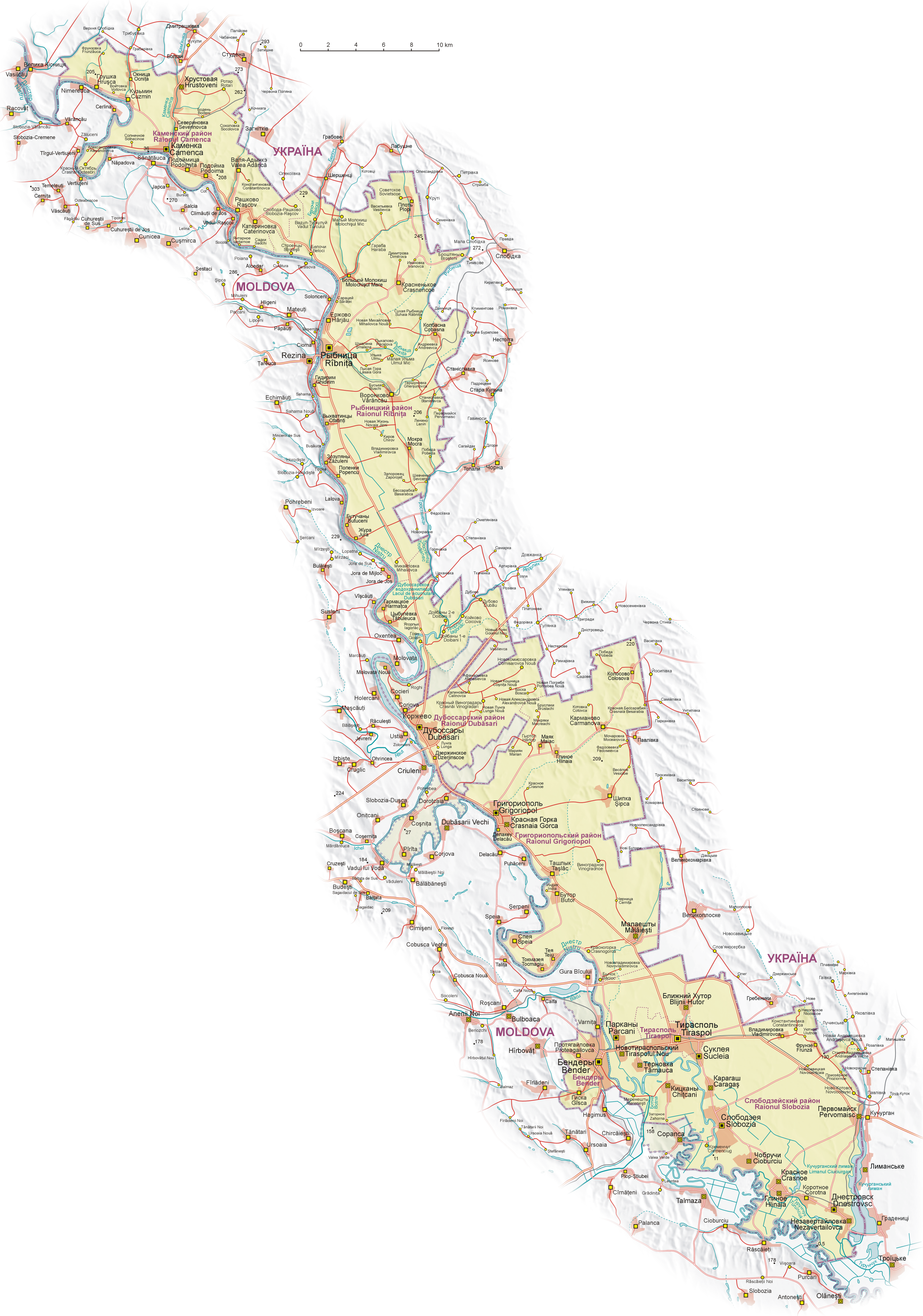
This project will potentially be a part or an annex of my PhD dissertation, which I will hopefully write during my participation in the PhD program of the History and Art History Department, at George Mason University. As my dissertation project will focus on the comparative analysis of two neighbor towns-Ribnita and Rezina-situated in the north-eastern corner of this map, which represent a de jure non-existent, but a de facto entity called Transnistria, my web project will entail a structure of different layers (maps, images, photos, texts), which will illustrate the evolution of these two localities during the first half of the 20th century.

The necessity of the project

In addition to the objective necessity of fulfilling certain academic requirements, the project will focus on the achievement of following goals:

  1. It will serve as a platform for the cooperation involving both the scholars in the field and people in the region
  2. It can be an instrument for the exploration of the online environment in different conflict-resolution strategies
  3. It will serve as a valuable tool for teachers and students who want to explore the journey of "real people" through different political, social and economic contexts.
Main features

First of all, it will be a web based collection of different tagged items pertaining to the history of the region. Secondly, it will be possible for visitors not only to comment on each entity of the collection, but also to tag different elements inside the items. Finally, the web resource will also have a section, which will deal with my dissertation. This section will display an interface similar to a blog, with entries referring to my ideas on the dissertation and readings on this subject.

Audience

I have mentioned some thoughts on this issue, in my previous post. Since at that time, I was thinking about two projects, I might say that at this stage, the audience is a sum of the both projects' audiences. Thus, it is targeted toward scholars and local communities.

Technologies

For this undertaking I consider mainly two technologies such as: Omeka and GIS. First tool is for the management of the collection and second is mainly for the creation of complex environments from the individual items.

Interactive elements

Referring to the existence of certain Web 2.0 applications, I would say that, initially this project will rely mainly on the "Comments" feature enabling each visitor to comment on the items and on any blog post. The next step would be to develop the trust of the community and to involve it into the online mechanisms of documents collection.


some thoughts on a great movie

For those who enjoyed or who are going to enjoy this article by Errol Morris, I would recommend to dedicate two hours more and to watch the movie "Memento" by Christopher Nolan.

The movie is a multidimensional saga of one guy who is suffering from "this condition" of a short term memory loss. It is multidimensional because the action is not staged according to a classical linear time framework, but it is a series of flashbacks, which starts from a certainty and lead to an illusion. The certainty is represented by a murder, the illusion is represented by the tricks and traps of memory and of interpretation. In a sense, if the story would have been developed according to a typical detective story it would not have the same appeal.

Instead, the director added some layers on the subject of the murder. The murderer is a typical human enraged by a cause, which to him seems to be a "just cause" of revenging his wife's murder. As is so often the case, what to him seem to be a series of certainties, actually are no more than illusions, which are rendered possible by his guilty consciousness. As a matter of fact, it turns out that the murderer and his chaser proved to be the same person. Finally, the murderer decide to surrender to "his condition" and to tell his story in his own way. Instead of coming into terms with his own personality, he is becoming a prisoner of his mental condition.

In addition to this fascinating narration of the story, the movie entails some great historiographical questions, such as: the issue of memory and its mechanisms, the objective/subjective value of historical interpretation, the multifaceted nature of identity.

Sunday, October 4, 2009

project audience

Since I have in mind two projects I will try to convey a general idea about the audiences of both projects. In the case of a website for The Moldovan National Archives, I guess the main audience would be researchers from all around the world, interested in browsing through numerous collections of the Archives and finding their way through them without making a journey to the Archives. Of course, it is impossible to provide all the content in the digital form, but at least, this web site will provide general guidelines, such as: available collections, hours of operation, archival policies in the area of document reproduction, telephone numbers and physical address of The National Archives and of other archives from the area. Since Archives are open not only for researchers but also to the local communities, the web site will also try to reach to the local population in terms of genealogical research or other services, such as, for example, the restoration of property rights after the fall of USSR.

Concerning the second project, the one concerning the analysis of the two localities in the first half of the 20th century, there is a chance that this project will have as its audience the local population. I am referring to "a chance" because as any new media project this one has got a lot of unexpected elements. Taking into consideration the fact that, nowadays, the two localities Ribnita and Rezina, which can be located in the upper right corner of this map, are divided not only by the Nistru river but also by the legacy of the Transnistrian conflict, then the web site can be not only a historical project but also a site of shared memories, where each community could share its moments of pain and hope. This being said, I am waiting for your comments and criticism.

Tuesday, September 29, 2009

wiki-history

Recently "Daily Mail" resurrected the debate on the fate of Adolf Hitler, during the last days of the Soviet offensive in Nazi Germany. The article reads that:

Adolf Hitler may not have shot himself dead and perhaps did not even die in his bunker, it emerged yesterday. A skull fragment believed for decades to be the Nazi leader’s has turned out to be that of a woman under 40 after DNA analysis.
In short, the story narrates about Nick Bellantoni, University of Connecticut archeologist, who, during his visit to Russian National Archives collected DNA swabs of the skull, and concluded that the skull did not belong to Hitler.

Today, I read another article, published by a Russian website, in which Vladimir Kozlov, the Deputy Director of the Russian State Archive, denied the possibility that Nick Bellantoni visited the State Archive, given the fact that the Archive Registrar has not issued a permit with this name in the last 4 years. In addition, Kozlov mentions that an one hour procedure of drawing DNA samples by cotton swabs, would not be allowed by the archivists. Moreover, he emphasizes the fact that the skull, which was not unanimously accepted as a fragment of Hitler's skull, is not the only proof of Hitler's death. There are another materials such as: the jawbone (which remains away from public view) and the bloodstained sofa segments.

According to The Telegraph's top of the most visited Wikipedia pages for 2008, the page of Adolf Hitler is ranked 17th in the list of 50 pages. The paragraph under the heading Defeat and death contains a very detailed account of these events. Due to the quick reaction of Wikipedia's editors, the entry on the death of Hitler has been completed with the information from "Daily Mail". What about the information from the Russian web site? I guess if Bellantoni did find other ways to approach Hitler's skull, and indeed drew some DNA, then the entry would stay intact, but if Kozlov was right and Bellantoni did not attend Russian State Archive, then it should be deleted.

Until then, my suggestion is to admire the critical thinking of some of the participants in the Discussion section of this Wikipedia page, under the heading The skull proven not to be Hitler's:

No. The link provided says nothing about it not being Hitler's skull. It *is* written in a sensationalist manner though to provoke interest. Clearly a reputable source is needed. srushe (talk) 00:24, 27 September 2009 (UTC)

Should atleast be added as "after DNA testing, doubt was cast..." User:MetallicaAddict-MetalJunkie --MetallicaAddict-MetalJunkie (talk) 05:53, 28 September 2009 (UTC)


Monday, September 28, 2009

compromise

The Web 2.0 component of the new media is perhaps the most exciting part of the interaction between "old" and " new" media in the process of learning and teaching humanities and other disciplines. If somebody may object to the quality of the content disposed on Wikipedia or other collaborative wiki platforms (although as Rozenweig's piece suggests some problems can be transformed into advantages), then I guess both "experts" and "amateurs" enjoy the possibility to share their views and thoughts on a certain topic, or to engage in an interdisciplinary discussion.

Here the excitement is not merely that the Web 2.0 will replace the traditional conferences, but it is the great opportunity to display your thoughts and your research process to the scrutiny of the diverse audience. Of course, there is a risk that after an extended session of exchanging comments in a virtual realm, one might found out that there are no more subjects to debate at the conference table, but at the same time, there is another opportunity, that the lively debate will transcend the pixelized format and will jump into the implementation stage.

When in comes to the implementation stage, "First Monday" series featuring Schnapp's idea of any public institution as "a glocal enterprise" transcends the concept of the archives, libraries and museums as physical repositories of memory and make the "memory palaces of the 21-st century more permeable." In this sense, new media has to be an additional layer of means which will not only bridge the communication gap between different social groups, but will also generate interest and non-traditional insights into the physical space of the museum.

A new medium needs new tools. In other words, you cannot make modern cars only with hammers. Although they are still used and will be used, you need some special technical skills to operate different techniques. In this sense, Bruce's project can be characterized as an online photo laboratory which train photographs for the possibilities and challenges of the new medium.